
The Unique Identity of a Polymer Banknote

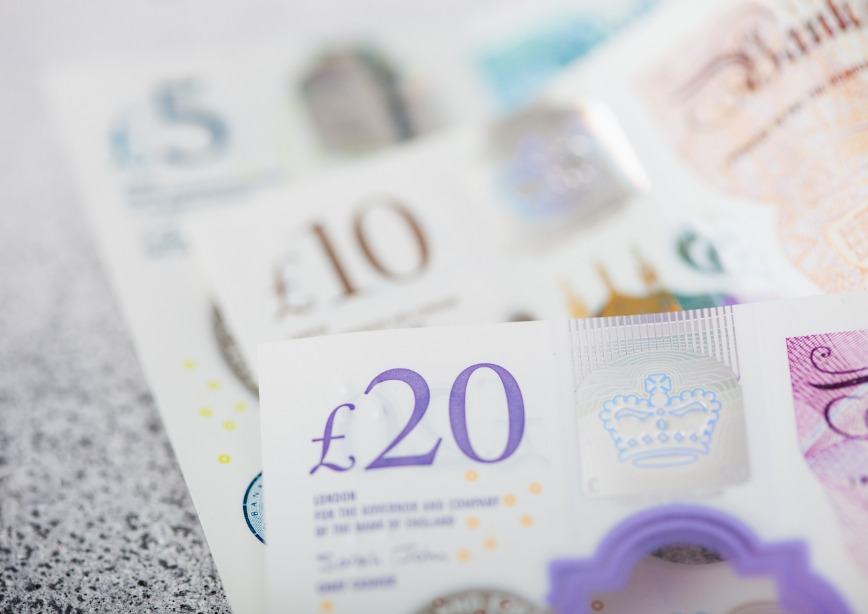
When a polymer banknote is produced, a number of opacification layers are printed onto the core substrate so that it can accept the traditional banknote printing processes such as litho, intaglio, screen and letterpress printing.
A research team at the universities of Warwick and Durham in the UK have studied 6,200 images taken from 340 UK banknotes and determined a unique identity of each banknote. They suggest that this is a way to safeguard polymer banknotes from counterfeiting by people who have access to genuine banknote printing inks and techniques.
The team have given their process a name, Polymer Substrate Fingerprinting. The opacity coating leaves an uneven coating layer with a random dispersion of impurities in the ink. This results in random translucent patterns when a polymer note is bank lit by a light source. Using a commodity negative-film scanner, the patterns are processed into a compact 2048-bit vector which creates a unique identify, a ‘fingerprint’.
Subscriber content
Read the full article
Full access to Currency News™ articles, newsletters and archives.